Diamond Buying Guide for Altus, OK Shoppers
Two diamonds can look nearly identical in a case and still differ in price by a wide margin. The reason comes down to four characteristics that the jewelry industry uses to describe every stone: cut, color, clarity, and carat weight. Knowing what each one means will not turn you into a gemologist, but it will help you ask better questions and spend your money where it makes a visible difference.
This guide covers the basics. When you are ready to see them on actual diamonds, the staff at Crown Jewelry on Main Street can walk you through it stone by stone.
The 4 Cs of Diamond Quality
A diamond's beauty, rarity, and price are set by the combination of all four. None of them works alone.
Cut
Cut is often confused with shape. Shape is the outline of the stone: round, square, pear, heart, marquise, or oval. Cut describes the angles and proportions of the facets, and it is the one characteristic people control rather than nature.
A well-cut diamond reflects light from one facet to the next and sends it back up through the top of the stone, producing fire and brilliance. Cut too deep or too shallow, a diamond leaks light out the sides or bottom and looks dull, which also lowers its value. If you only prioritize one C, many shoppers find cut has the biggest effect on how a diamond actually looks on the hand.
Color
White diamonds remain the most popular, although diamonds occur in many colors. The Gemological Institute of America grades color on a scale from D, which is colorless, to Z. Differences between neighboring grades are subtle enough that diamonds are graded under controlled lighting and compared against a master set.
Colorless D stones are prized for their rarity, but color preference is personal. Seeing several grades lined up together is the quickest way to learn where your eye stops noticing a difference.
Clarity
Natural diamonds form with tiny internal features such as mineral crystals or fractures, known as inclusions. Clarity measures how many there are and how noticeable they are, on a scale established by GIA. Higher clarity means a rarer, more valuable stone.
Placement matters as much as quantity. An inclusion near the center or top of the diamond can interfere with
how light moves through it and reduce brilliance. At Crown Jewelry, diamonds are viewed at 10x their actual size so inclusions are easy to locate before you decide.
Carat Weight
Carat measures weight, not size. One carat equals 100 points, so a 3/4 carat diamond weighs 75 points. Because large diamonds are found less often in nature, a 1 carat stone costs more than twice as much as a 1/2 carat stone when the other characteristics are the same.
Here is the useful part: a strong cut and the right mounting can make a diamond appear larger than its weight suggests. That gives you room to balance size against budget.
Custom
Lab Grown or Natural
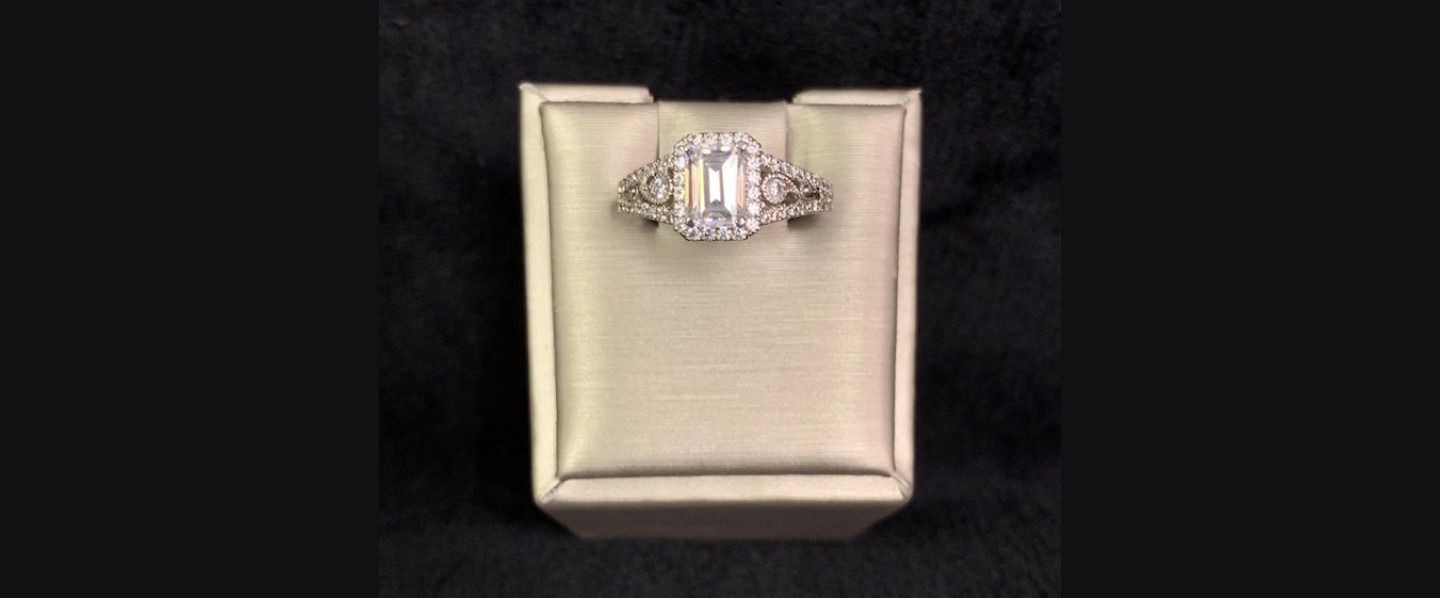
Crown Jewelry carries both lab grown and natural diamonds. Both are graded using the same four characteristics, so everything above applies to either choice. Comparing them in person is the simplest way to decide which suits your priorities, and the full range of rings and bands is on our engagement rings and diamond jewelry page.
Putting the Four Together
Most buyers do not max out every category. A common approach is to choose the shape you love, put cut near the top of the list, and then trade color, clarity, and carat against one another until the stone and the price both feel right. A setting chosen with care can help, too, which is one reason some shoppers move into custom jewelry design once they have picked a stone.
Already own a diamond and want to know its grades? Our certified appraisers provide color and clarity grading as part of jewelry appraisals in Altus.
Custom
The Fifth C: Crown Jewelry
Grading charts only go so far. The other piece of buying a diamond is the people you buy it from, and at Crown Jewelry that comes down to five values the store holds itself to.
Confidence means giving you enough information to make a purchase you feel sure about. Integrity means following an ethical code of conduct and sound business practices. Expertise is the experience, skill, and knowledge the staff bring to each sale. Trust is earned through hometown service. Honesty means being truthful about both the information and the pricing of every piece in the store.
If you need help finding the right diamond, a jeweler at Crown Jewelry will guide you through it. You can explore the rest of what we offer on the Crown Jewelry home page.